WE HAVE SOME GREAT LIMITED-TIME OFFERS - CLICK HERE TO VIEW THEM WE SHIP WORLDWIDE    /    All UK ORDERS GREATER THAN £75 EX VAT DELIVERED FREE    /    WE SHIP WORLDWIDE    /    ALL EUROPEAN ORDERS GREATER THAN £500.00 ex VAT DELIVERED FREE    /    WE SHIP WORLDWIDE
    Share this page on Facebook   Share this page on LinkedIn   Share this page on Twitter   Share this page on Whatsapp   

    Rapid Ref : CK-SGACV101L5  Mfr Ref : SGACV-10-1-L5

    CK Steady-Grip Amperage Control for Lincoln Electric 5 Pin Machines - 4.5m
    SGACV-10-1-L5 CK-SGACV101L5

    £317.05  EX VAT
    SSP Suggested Selling Price = £373.00  YOU SAVE £55.95
     Buy in 3 easy interest free payments of £105.68† with

    CK Steady Grip Amperage Control with 10K Potentiometer and 5 Pin plug for Lincoln Machines – 4.5m Cable.

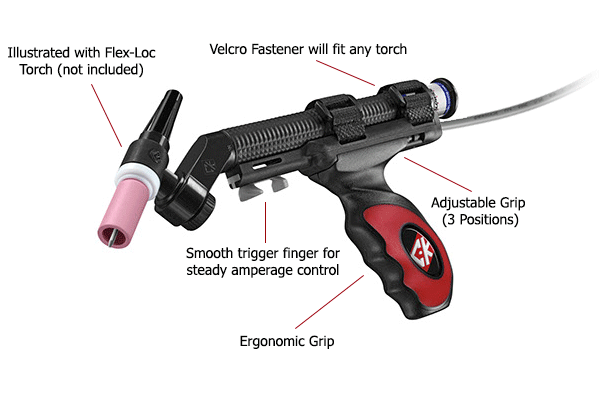
    With a removable and adjustable pistol grip style handle, the new CK Steady Grip gives the operator smooth, accurate and ergonomic trigger finger control of the TIG welding process. The Steady Grip can be used with most constant current TIG power sources and provides machine contactor on-off, gas solenoid activation and full range amperage control.

    • Complete on/off and full amperage control
    • Available for most power sources
    • Velcro Fasteners to fit any torch
    • Adjustable grip - 3 positions 
    • Protected against high frequency

    CK Steady Grip Amperage Control

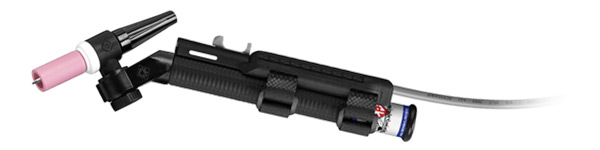
    CK Steady Grip with grip removed
    Remove Handle for use as Linear Slide configuration

    Shops FAQs

    Straight answers to the questions people ask most when choosing equipment and consumables by maker.

    How do I choose between different makers of welding equipment?icon-minus-redicon-plus-red

    Start with the job rather than the name on the machine. Work out the process, the material and thickness, how often you will weld and where the work will be done, then compare the specifications of equipment that suits. Most established makers build good equipment, and the real differences tend to be in features, build quality, ease of use and the support behind the product.

    It also helps to ask other welders in your trade what they use and why, and to try a machine or helmet in your hands where you can. If you are unsure, our team can help you narrow the choice.

    How do I make sure an accessory or spare part fits my machine?icon-minus-redicon-plus-red

    Use the exact model name and, where there is one, the serial number or part number from the rating plate or the manual. Identify the part by its part number, or by its connection type, size and thread, rather than by appearance alone, because parts that look the same can differ in small but important ways.

    Also check the cooling method (gas or water), the current rating, the cable length and the type of connector. Models are revised over time, so two machines with the same name can have different versions. If you are not sure, our team can help you match the part to your machine.

    How do I read a machine specification?icon-minus-redicon-plus-red

    Look first at the input supply: the voltage, whether it is single-phase or three-phase, and the input current. Then look at the output: the current range, and the duty cycle at a stated current, which tells you how long the machine can weld in a ten-minute period before it needs to cool.

    Also check which processes it supports, the wire or electrode sizes it takes, the cooling method, the weight and the protection rating. When you compare machines, compare duty cycle at the same current, because a high maximum current means little if the machine can only hold it for a short time.

    Should I register my equipment and keep the paperwork?icon-minus-redicon-plus-red

    Yes. Keep the invoice, the manual and a note of each serial number, ideally somewhere separate from the equipment. Many makers let you register a product, which can help with warranty claims and means you can be told about safety notices or updates.

    If you use equipment at work, keep records of inspections and servicing, because employers have duties to keep work equipment safe. Follow the maker's instructions and your own risk assessment on how often checks should be done.

    Shop Similar Categories