WE HAVE SOME GREAT LIMITED-TIME OFFERS - CLICK HERE TO VIEW THEM WE SHIP WORLDWIDE    /    All UK ORDERS GREATER THAN £75 EX VAT DELIVERED FREE    /    WE SHIP WORLDWIDE    /    ALL EUROPEAN ORDERS GREATER THAN £500.00 ex VAT DELIVERED FREE    /    WE SHIP WORLDWIDE
    Share this page on Facebook   Share this page on LinkedIn   Share this page on Twitter   Share this page on Whatsapp   

    Rapid Ref : 1G15-RD  

    Gullco Katbak 1G15-RD Ceramic Weld Backing Tiles, 12m Box
    1G15-RD

    £47.59  EX VAT
     Buy in 3 easy interest free payments of £15.86† with

    These tiles are for similar uses as the 1G6-RD but for thicker plates up to 15mm thick. Suitable for welding with M.I.G./ M.A.G. solid, flux-cored or metal-cored wires. 

    Can be used as shown below.

    • Impart X-ray quality back beads on root pass
    • Weld one side only
    • Deposit more weld metal
    • Root weld and fill in one pass
    • Eliminate defects and rework
    • Eliminate costly unnecessary gouging and grinding
    • Special sizes and configurations available
    • Conveniently packaged and sealed in plastic for moisture-proof protection
    • Wider heat receptive pressure sensitive foil for improved adhesion to work piece

    12m - 40ft./ box
    Gullco Katbak 1G15-RD

    Specifications
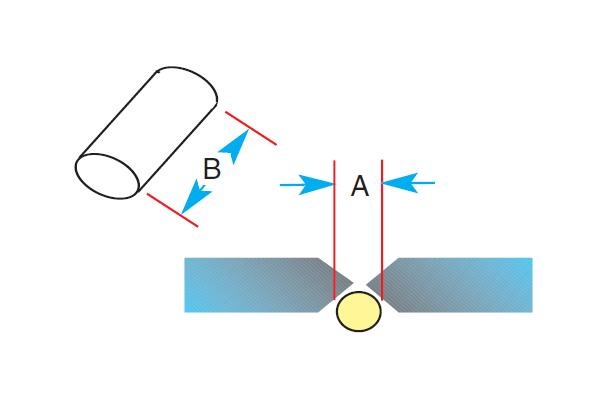
    A 5/8 in
    15.9 mm
    B 1 in
    25.4 mm

    Brochures & Manuals

    BROCHURES & MANUALS
       View Brochure

    Ceramic Backing Tiles FAQs

    Straight answers to the questions people ask most when choosing and using ceramic weld backing tiles.

    What are ceramic backing tiles and what are they used for?icon-minus-redicon-plus-red

    Ceramic backing tiles are strips of heat-resistant ceramic, usually fixed along the back of a joint with an adhesive aluminium foil tape. They support the molten weld metal from behind, so you can make a full-penetration weld from one side only.

    They are widely used in shipbuilding, structural steelwork, tanks and pressure parts where the back of the joint cannot be reached, or where welding and then gouging from the second side would take too long. They are used with MIG, flux-cored, stick and submerged arc welding, depending on the type of tile.

    How do I choose the right tile shape and size?icon-minus-redicon-plus-red

    The tile shape controls the profile of the root bead, and it must suit the joint. Flat tiles, grooved tiles with a round or square channel, and tiles with different groove widths are made for different joint preparations, root gaps and plate thicknesses. Some are designed for corner or fillet joints, and others for curved surfaces.

    The tile maker's guidance links each tile to the root gap and bevel it was designed for, so match the tile to your joint preparation and welding procedure. If you are unsure, ask the maker or our team.

    Which welding processes and positions can I use with ceramic backing?icon-minus-redicon-plus-red

    Ceramic backing is used with several arc welding processes, and tiles are made for particular processes, current levels and positions. Check the tile's specification and your welding procedure to confirm that the type suits your process and position.

    Ceramic backing supports the molten metal from behind. Do not assume it also protects the root from the air. For metals that oxidise easily on the underside, check your procedure and the material's requirements for whether extra root protection is needed.

    Why is my root bead poor or not fusing at the edges?icon-minus-redicon-plus-red

    The usual causes are a root gap that is too narrow or wide for the tile, a tile that does not sit squarely under the joint, poor contact between the tile and the metal, or settings and technique that don't suit the joint. Lack of fusion at the edges can come from too low a current or travel that is too fast.

    Welding over damp tiles can cause porosity. Check the fit-up, the tile position and the foil seal, and prove the settings on a test piece before welding the real joint.

    Shop Similar Categories