WE HAVE SOME GREAT LIMITED-TIME OFFERS - CLICK HERE TO VIEW THEM WE SHIP WORLDWIDE    /    All UK ORDERS GREATER THAN £75 EX VAT DELIVERED FREE    /    WE SHIP WORLDWIDE    /    ALL EUROPEAN ORDERS GREATER THAN £500.00 ex VAT DELIVERED FREE    /    WE SHIP WORLDWIDE
    Share this page on Facebook   Share this page on LinkedIn   Share this page on Twitter   Share this page on Whatsapp   

    Rapid Ref : 1G80-R  

    Gullco Katbak 1G80-R Ceramic Weld Backing Tiles, 12m Box
    1G80-R

    £47.59  EX VAT
     Buy in 3 easy interest free payments of £15.86† with

    This tile is specially designed to prevent back bead droop in horizontal welding and can be used with MIG welding with solid wire, metal core wire and can also be used with flux core wire.

    Can be used as shown below.

    • Impart X-ray quality back beads on root pass
    • Weld one side only
    • Deposit more weld metal
    • Root weld and fill in one pass
    • Eliminate defects and rework
    • Eliminate costly unnecessary gouging and grinding
    • Sizes 1/4” (6.3 mm) to 6” (152.4 mm)
    • Special sizes and configurations available
    • Conveniently packaged and sealed in plastic for moisture-proof protection
    • Wider heat receptive pressure sensitive foil for improved adhesion to work piece

    12m - 40ft./ box
    Available in 1/4” to 2” (6.3mm to 50.8mm) tiles.
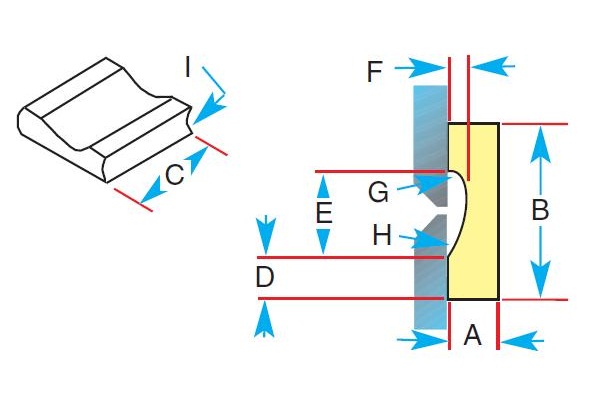
    Gullco 1G80-R

    Specifications
    A 1/4 in
    6.3 mm
    B 1 in
    25.4 mm
    C 1 in
    25.4 mm
    D 1/4 in
    6.3 mm
    E 1/2 in
    12.7 mm
    F 3/32 in
    2.4mm
    G 3/32 in
    2.4 mm
    H 3/4 in
    19mm
    I 3/16 in
    4.8mm

    Brochures & Manuals

    BROCHURES & MANUALS
       View Brochure

    Ceramic Backing Tiles FAQs

    Straight answers to the questions people ask most when choosing and using ceramic weld backing tiles.

    What are ceramic backing tiles and what are they used for?icon-minus-redicon-plus-red

    Ceramic backing tiles are strips of heat-resistant ceramic, usually fixed along the back of a joint with an adhesive aluminium foil tape. They support the molten weld metal from behind, so you can make a full-penetration weld from one side only.

    They are widely used in shipbuilding, structural steelwork, tanks and pressure parts where the back of the joint cannot be reached, or where welding and then gouging from the second side would take too long. They are used with MIG, flux-cored, stick and submerged arc welding, depending on the type of tile.

    Why use ceramic backing instead of a steel backing strip or welding from both sides?icon-minus-redicon-plus-red

    A steel backing strip stays in the joint, which can create a crevice, add weight and sometimes cause problems with fatigue or corrosion, and it must be the right material. Welding from both sides means turning the work, back gouging or grinding the root, and welding again.

    Ceramic tiles are removed afterwards, leaving a clean, smooth root without the extra steps or a permanent strip. Whether ceramic backing is allowed for a job is set by the welding procedure, so check what your specification permits.

    How do I choose the right tile shape and size?icon-minus-redicon-plus-red

    The tile shape controls the profile of the root bead, and it must suit the joint. Flat tiles, grooved tiles with a round or square channel, and tiles with different groove widths are made for different joint preparations, root gaps and plate thicknesses. Some are designed for corner or fillet joints, and others for curved surfaces.

    The tile maker's guidance links each tile to the root gap and bevel it was designed for, so match the tile to your joint preparation and welding procedure. If you are unsure, ask the maker or our team.

    How are ceramic tiles fixed to the work?icon-minus-redicon-plus-red

    Most tiles come mounted on a strip of foil tape with an adhesive backing. The tape is pressed onto the back of the joint so the tile sits centred under the root gap, and the foil is smoothed down along its length so it makes good contact.

    Follow the instructions supplied with the tiles for preparing the surface and for the temperature range in which the adhesive works. In general, the metal should be clean and free of moisture, oil and loose material. Make sure the tiles butt neatly end to end so there is no gap between them.

    Shop Similar Categories