WE HAVE SOME GREAT LIMITED-TIME OFFERS - CLICK HERE TO VIEW THEM WE SHIP WORLDWIDE    /    All UK ORDERS GREATER THAN £75 EX VAT DELIVERED FREE    /    WE SHIP WORLDWIDE    /    ALL EUROPEAN ORDERS GREATER THAN £500.00 ex VAT DELIVERED FREE    /    WE SHIP WORLDWIDE
    Share this page on Facebook   Share this page on LinkedIn   Share this page on Twitter   Share this page on Whatsapp   

    Rapid Ref : VHC15  

    Strong Hand Half Clamp, "Weld On Jacking Clamp"
    VHC15

    £48.67  EX VAT
     Buy in 3 easy interest free payments of £16.22† with

    The efficient, safe way to align materials. The half clamp is ideal for fabricators, repairmen, ship and barge builders.

    • The DOG & WEDGE and CUT-OFF C-CLAMP methods of material alignment can be messy and time-consuming
    • Align materials in the fabrication of water tanks, bulkheads, deck sections, flat plates, etc
    • For big jobs, tack weld additional 38mm cut pipes along the joint, move the clamp accordingly, or use multiple half clamps

    How to Use
    Strong Hand Weld On Half Clamp
    Tack weld the front side of the 1-1/2" pipe coupon to the lower of the two surfaces. Slide Half Clamp onto the cut pipe, and turn the handle until the misaligned materials align.

    Specification
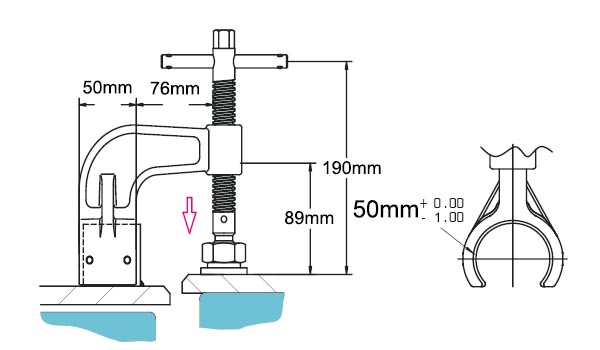
    VHC15 Specification

    Brochures & Manuals

    BROCHURES & MANUALS
       View Brochure

    Welding Clamps FAQs

    Straight answers to the questions people ask most when choosing and using clamps for fabrication and welding.

    What is a two-axis or three-axis welding clamp for?icon-minus-redicon-plus-red

    These clamps hold work in position from more than one direction at once. A two-axis clamp can hold two pieces at an angle, such as a corner or a T-joint, while a three-axis clamp adds a third direction so you can hold a part in all planes without a second clamp.

    They save you having to juggle several clamps, and hold awkward fabrication joints steady while you tack them. Choose one with a capacity and opening that suits the thickness and size of the work.

    What do capacity and throat depth mean on a clamp?icon-minus-redicon-plus-red

    Capacity is the largest opening the clamp can grip, in other words the thickest or widest work it can hold. Throat depth is how far the jaws can reach in from the edge of the work, which decides how far from the edge you can clamp.

    For general fabrication, choose a capacity a little larger than the biggest thing you will hold, and a throat deep enough to reach where you need to clamp. A very long clamp is heavy and awkward to use on small work, so keep a range of sizes.

    What are angle clamps used for?icon-minus-redicon-plus-red

    Angle clamps hold two pieces at a fixed or adjustable angle while you tack them. Square clamps hold at 90 degrees, and adjustable ones can be set to other angles, which is useful for frames, boxes and mitred joints.

    Check the angle with a square or protractor before you tack, because the clamp can only be as accurate as its own condition and how well the parts sit in it. Tack, check and then remove the clamp to finish welding where you can.

    How do I protect clamps from weld spatter?icon-minus-redicon-plus-red

    Spatter that lands on the thread or spindle makes the clamp stiff and can bond to the surface. Keep the clamp out of the line of fire where you can, and use anti-spatter on the thread, or cover the spindle. Some clamps have spatter-resistant coatings or copper-plated spindles that spatter does not stick to.

    Brush or wipe the thread clean after each use. Heat can also soften and spoil a clamp's finish and temper if it is held very close to the weld, so keep it clear of the hottest area.

    Shop Similar Categories